
YARN CARE
A little care.
A long, lovely life.
Caring for your hand-knit pieces doesn’t need to be tedious or stressful. Here you’ll find tips and tricks to help you care for the things you make with peace of mind.
01 · FROM THE DYE POT
Our Hand-Dyeing
Process
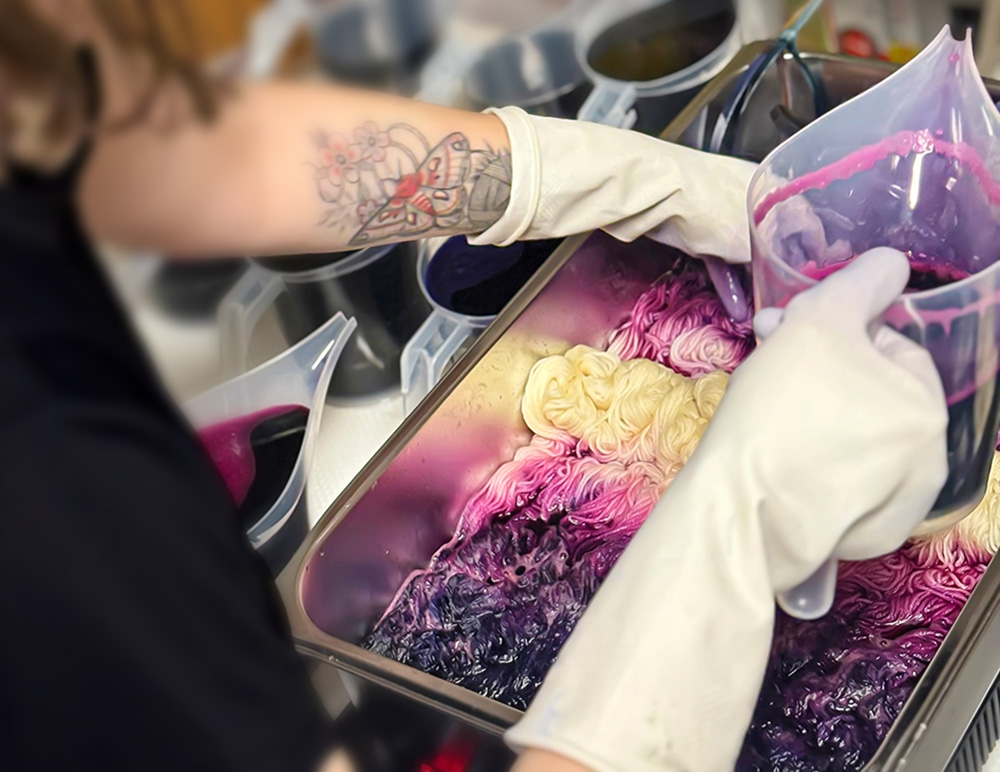
At Knot & Bones, every skein of yarn goes through a careful, hands-on dyeing process in our Jacksonville studio. Once dyed, each skein is gently rinsed and soaked in cool water with a nourishing wool wash, helping remove excess dye and leaving the yarn soft to the touch.
As a small indie dyer, I do my best to rinse away as much of the excess dye as I can while being conservative with the amount of water I use.
We then use a spin dryer to remove excess water, followed by air-drying—allowing each skein’s fibers to fully bloom.
EVERY SKEIN HAS ITS OWN STORY
The Beauty of
Hand-Dyed Yarn
Because of the amount of pigment we use during dyeing, a small amount of dye may be released from the fiber when you wash your projects at home.
This is something to keep in mind when choosing colors to use together in a project. Pinks, reds, and yellows can be particularly prone to releasing excess dye.
A little gentle care helps preserve the color, texture, and character that make your hand-dyed pieces special.
02 · COOL WATER, A GENTLE TOUCH
Caring for Your
Hand-Dyed Yarn
Delicate Wash Instructions
The washing process depends on the fibers used in your garments. Certain plant fibers, such as cotton, bamboo, rayon, and hemp, may be washed in a standard washing machine with cool water on the delicate setting when the yarn’s care instructions allow it.
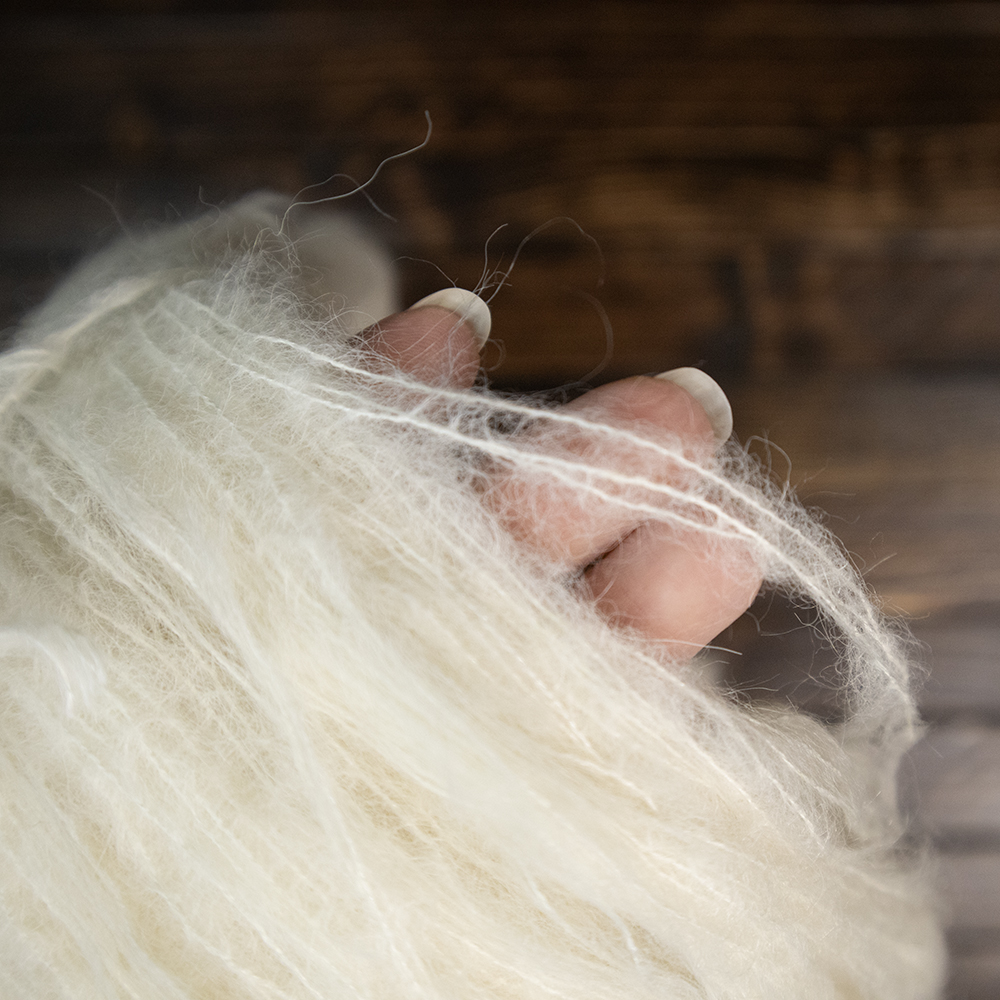
For animal fibers like wool, alpaca, silk, or angora, we recommend gentle hand-washing in cool water with a mild Delicate Wash designed for hand-dyed fibers, such as the one we offer.
These are my recommendations based on experience. Always follow the care instructions from the supplier of the yarns you’re using. The directions below are for our Delicate Wash; if you use another detergent, follow that detergent’s specific directions.

A GENTLE WASH, STEP BY STEP
Start with cool water.
Add up to 1 teaspoon of Delicate Wash per gallon of cool water. There’s no need to be exact—just don’t go overboard.
Give your garment room.
Make sure your item has plenty of room to swish around and soak up the good stuff.
Soak for 10–15 minutes.
We don’t recommend leaving hand-dyed garments to soak for long periods. Prolonged soaking can contribute to excessive dye bleeding.
Gently squeeze.
When time’s up, gently squeeze out the excess water. No twisting or wringing for wool, please!
Rinse if you prefer.
If you have extra-sensitive skin, you can give your garment a final rinse in clean water, though this is not necessary with our wash.
A little color is normal.
If the water changes color, don’t panic—that may be a little loose dye making a break for it. Enjoy your fresh and clean garment!
03 · LET IT DRY, NATURALLY
Drying
When it comes to drying hand-knit or crocheted items, I would never recommend putting them in a standard home tumble dryer—the kind that blows hot air and tumbles your garments around.
Remove the excess water.
My recommendation is a spin dryer. It won’t get your garments completely dry, but it can significantly reduce drying time if you hand-wash regularly.
If a spin dryer isn’t accessible, don’t fret! Gently squeeze out excess water with your hands, or use the towel method: place the garment between two dry towels and gently roll out the excess liquid.
Lay flat, then gently shape.
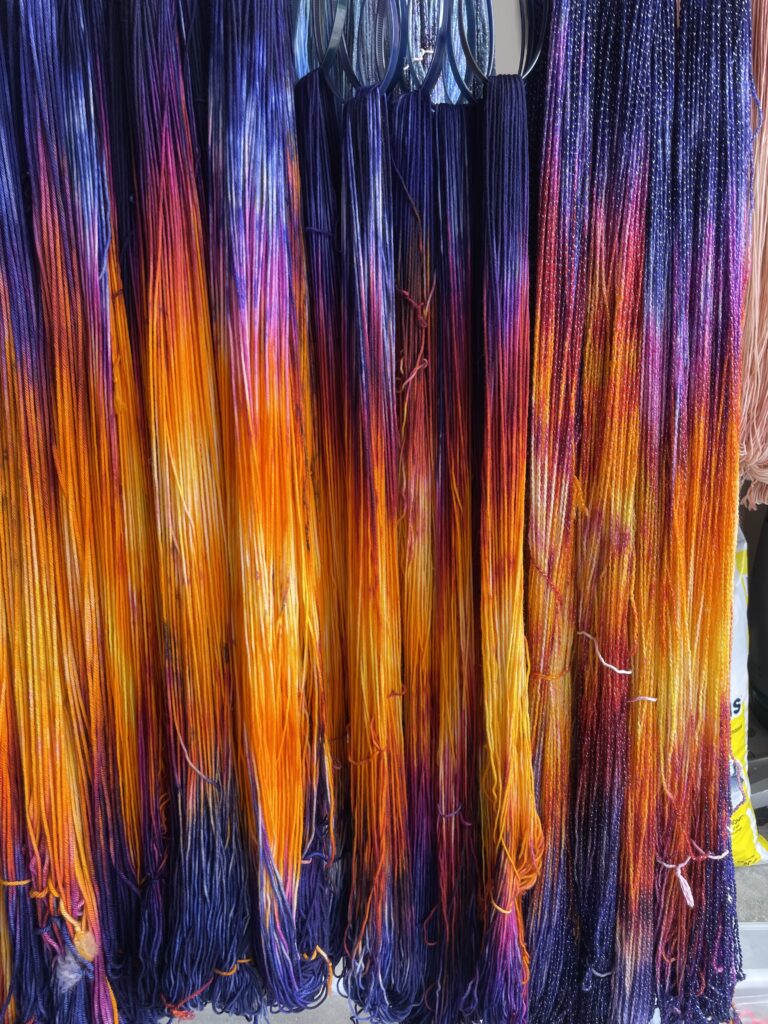
Once excess water is removed, lay your garment on a clean, flat surface, such as a dry towel or blocking mats. Keep it away from direct heat and sunlight. Heat can shrink or damage fibers, and sunlight can degrade pigments over time.
Gently shape your item—sometimes called blocking—into its intended shape. Be careful not to overstretch it, because wet fibers tend to grow.
Drying time depends on how much water you removed beforehand. The wetter the item is when you lay it out, the longer it will take to dry.
04 · UNTIL THE NEXT WEAR
Storage
A little thought about where.
When storing hand-knit or crocheted items, location is everything. Think about your climate and the space available to you.
In damp or humid climates, I recommend storing clean, fully dry garments and unused yarn neatly in sealed containers, such as plastic totes with lids or zippered garment bags. This is also useful if insects are an issue where you live—moths aren’t the only insects that like to munch on animal fibers.
Clean your pieces before storing them for long periods. Natural insect repellents, such as cedar chips, can also be kept with stored items.
Fold the weightier things.
Lightweight items may be suitable for hanging. For bulky garments or anything with significant weight, I suggest gently folding or rolling them instead.
On a hanger, the garment’s weight can gradually stretch the fibers, leaving pointy shoulders or gaping necklines. If this happens, don’t fret—you can usually re-block the item toward its intended shape.